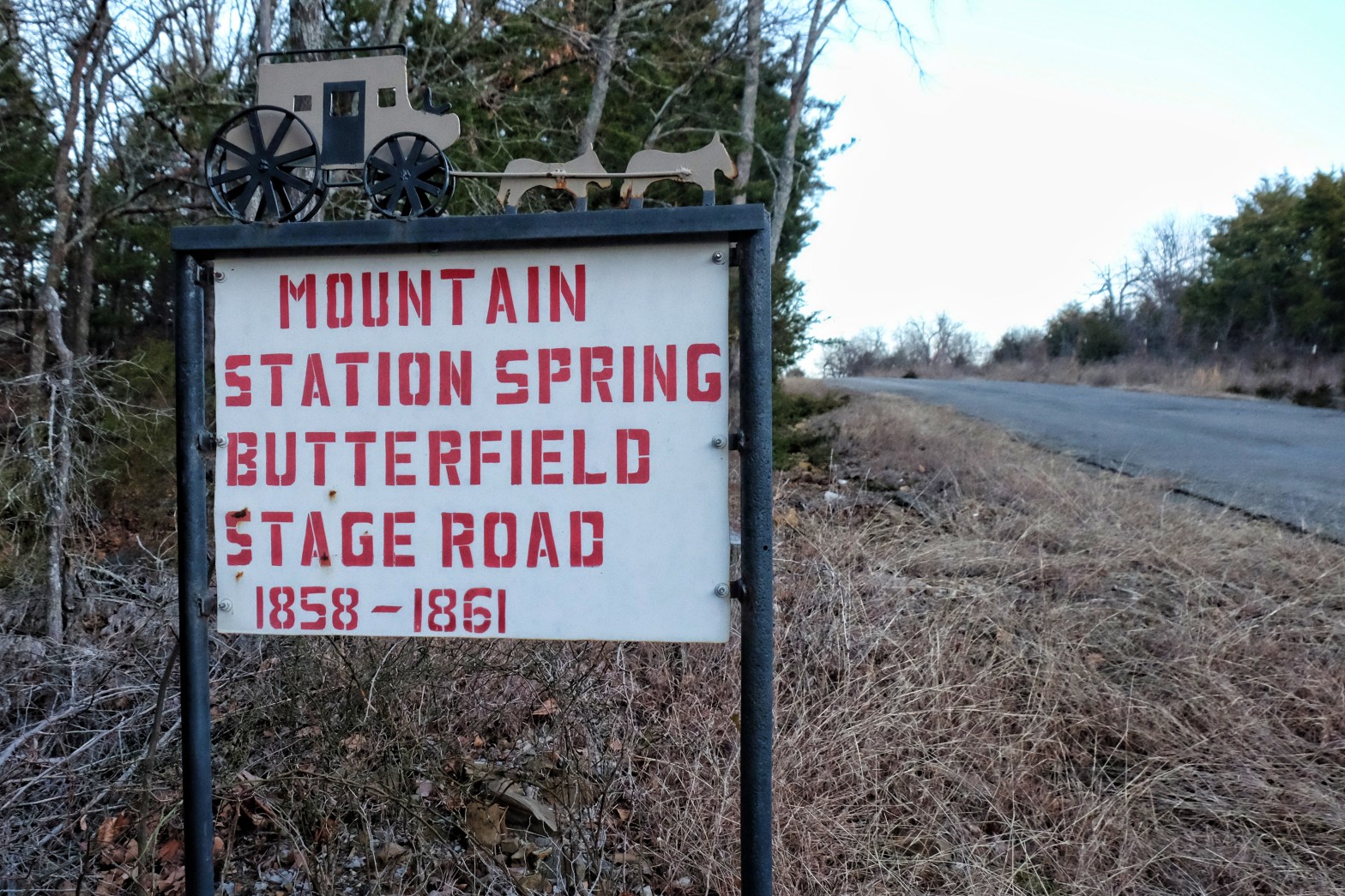
by Susan Dragoo
A Runaway Stage
In 1860, an eastbound stage of the Overland Mail carried Eadweard J. Muybridge, traveling as a through-passenger from San Francisco, from whence he had departed July 2. Best known for his use of photography to capture animals in motion for the first time in 1878, Muybridge laid the groundwork for modern motion pictures through innovations including the shutter system to stop motion and one of the earliest motion picture projectors, the “zoopraxiscope.”

But in 1860, he was an English book seller who had been living and working in San Francisco. Muybridge was traveling to the east coast and eventually to England. On Friday, July 20, the stagecoach met with an accident when the horses ran away on the descent of a hill. The wagon left the road, collided with a tree and was smashed to pieces. Muybridge sustained a serious head injury and a passenger with the last name of Mackey was killed. Everyone on board was injured.
As far as is known, this was the only stagecoach accident, or any other kind of incident, fatal to a passenger during the two and one-half year life of the Overland Mail line on the southern route, 1858-1861. Newspapers reported that the accident occurred at “Mountain Station.” This has been interpreted by some historians and Muybridge biographers as “Mountain Pass Station,” located on the Overland Mail route near Merkel, Texas, seventeen miles west of Abilene, about 250 miles southwest of Sherman, Texas, and nearly 500 miles from Fort Smith, Arkansas. A careful study of the geography and realities of transportation and communication in conjunction with the timing of events leads to a different conclusion, however.
Mountain Station, Indian Territory
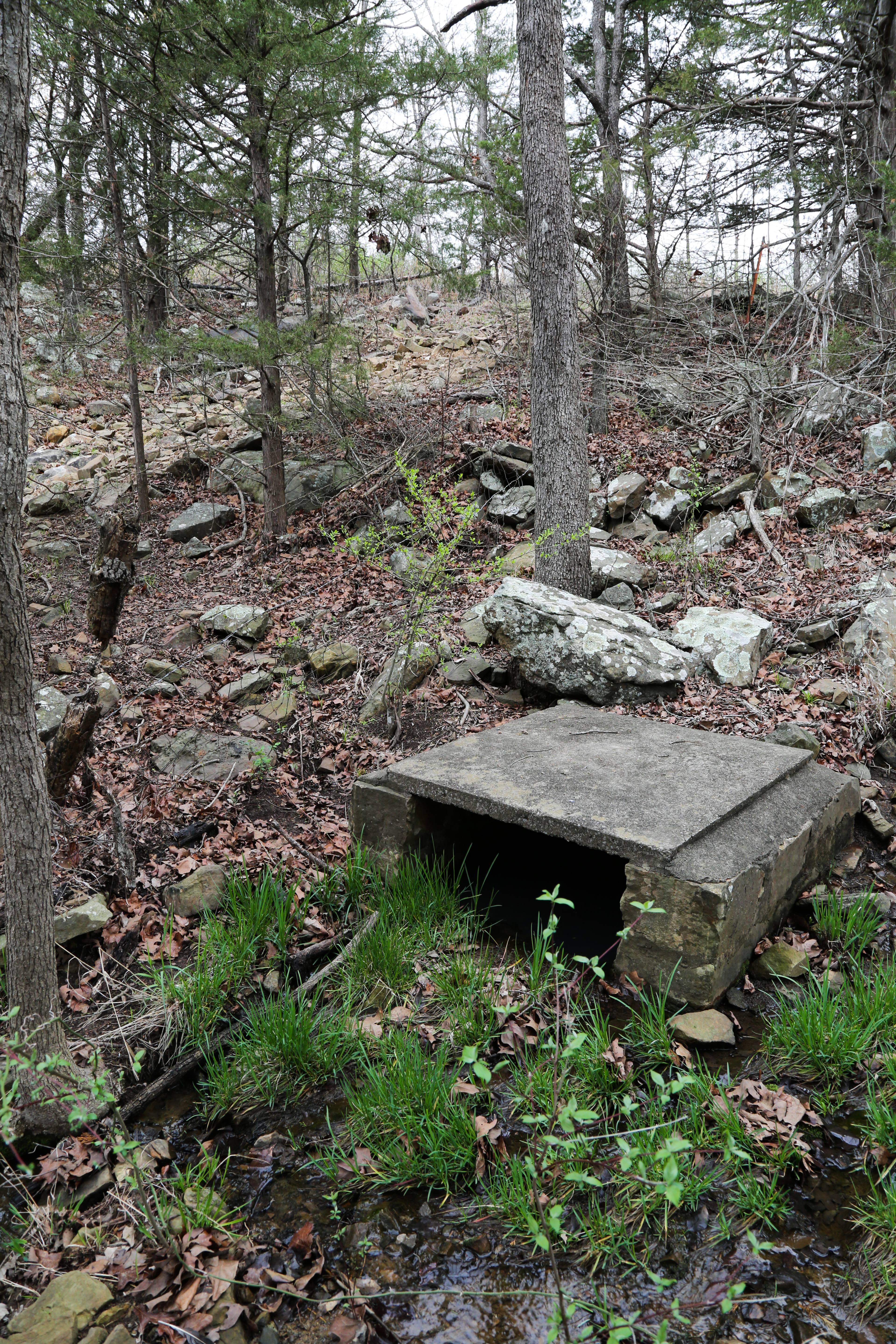
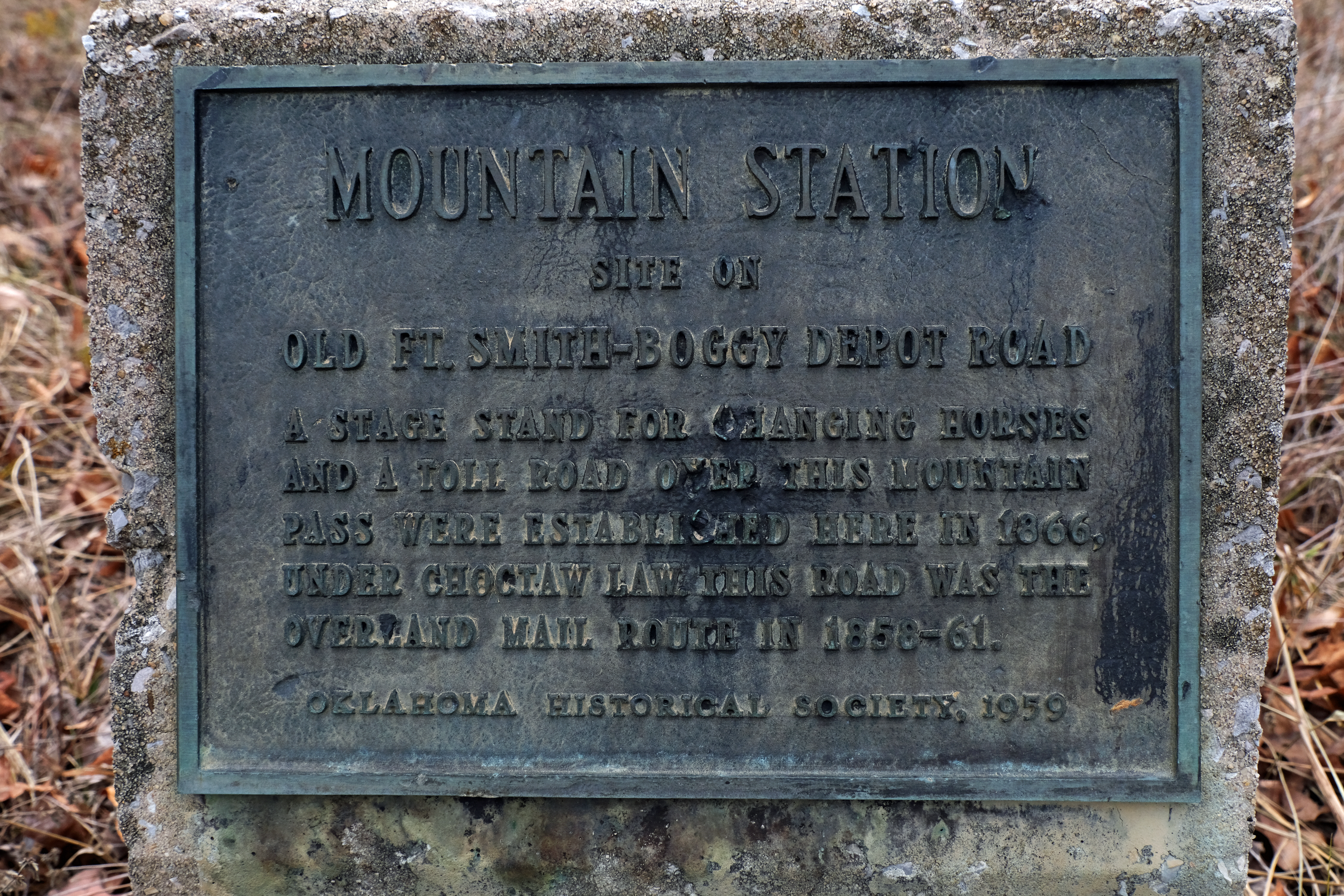
Although on at least one occasion Mountain Pass Station in Texas was referred to as “Mountain Station” in a newspaper report, there was another Mountain Station along the Butterfield route. A small relay station, it sat atop Blue Mountain in the Choctaw Nation between Riddle’s and Pusley’s, two of the twelve official Butterfield stations operated by Choctaw and Chickasaw citizens in the Indian Territory. Mountain Station was about 97 miles southwest of Fort Smith, Arkansas, in what is now southeastern Oklahoma. After the Civil War it was a well-known station on a later stage line, serving as a stop for watering horses and passengers, it being “hard driving over the rough road” on Blue Mountain. “The stages stopped at this place to water their horses and all who were aboard,” said old-timer William Dellwood Fields in 1937. In the words of another pioneer, “There was a stone house built over this great spring and part of the rocks are still there and the spring is still running today.” Another reported his father operated the trading post at Mountain Station for three years, and there was “lots of good water in a large spring there.” The spring is still flowing today near the crest of Blue Mountain.
Muybridge’s Testimony
Conclusions that the accident occurred in Texas seem to be based primarily on Muybridge’s testimony fifteen years after the accident. While on trial for the killing of his wife’s lover, Muybridge recollected that on his eastbound stagecoach journey he had dined at a stage-house, then boarded the stage, which was drawn by six wild mustang horses. “That is the last I recollect of that nine days,” he said. “After that, I found myself at Fort Smith, 150 miles distant, lying in bed.” He was treated for his head injury in Fort Smith before traveling on to New York, where he continued under the care of a physician. Muybridge sued the Butterfield company for $10,000 in damages from the accident but settled for $2,500.
Although Muybridge claimed no memory of the accident himself, he relayed that a fellow passenger told him the stage had traveled about half an hour and they were just then entering the Texas Cross Timbers. “Just as we were getting to the Timbers I remarked that the best plan would be for us to get out of the back of the stage, because I saw that an accident would take place. He told me that I took out my knife to cut the canvas back of the stage, and was preparing to leave when the stage ran against either a rock or a stump and threw me out against my head.”
Muybridge’s mention of the Cross Timbers is noteworthy. The western edge of Texas’ western or “upper” Cross Timbers (because they are higher in elevation than the eastern Cross Timbers) lies just east of the Mountain Pass Station area. The claim that upon awakening Muybridge found himself in Fort Smith, “150 miles distant,” conflicts with his testimony about the accident occurring in the Texas Cross Timbers near Mountain Pass Station, which is more than 450 miles from Fort Smith. Other inconsistencies in his testimony affirm that he had no memory of the accident and was relying on what he was told by another passenger, fifteen years later.
The recounting of the incident took place in support of an insanity defense in Muybridge’s murder trial. He was found not guilty, although insanity was not cited as the basis of the verdict. Rather, the jury believed the killing justified. Still, some believed that the long-term effects of the head injury led to significant abnormalities in his personality. “Prior to his accident,” testified a close friend, “Muybridge was a good businessman, genial and pleasant in nature; but after the accident he was irritable, eccentric, a risk-taker and subject to emotional outbursts.” Following his acquittal, Muybridge went on to achieve renown in the world of photography. The head injury did not appear to inhibit his intellectual or creative achievements; rather, some have speculated it may have actually enhanced his creative abilities because he became more willing to take risks, and pursued his art obsessively.

News of the Day
The notion that the accident occurred in Texas is difficult to support given contemporary newspaper accounts stating the accident occurred in the “Choctaw Nation” and “Choctaw Country.” On July 23, 1860, the telegraph line had just been put into operation at Fort Smith, with dispatches about the accident going out to newspapers around the country. The New York Times reported that a July 21, 1860 dispatch from Van Buren, Arkansas announced an accident to the Overland Mail coach, which was expected to delay the arrival of the mail about thirty hours. The horses, it said, ran away in the mountain pass of the Choctaw Nation. Another newspaper report directly quotes a passenger on the stage, S.P. Nott, of Sherman, Texas, also referring to the accident’s location in “the Choctaw country.” Nott’s is the most detailed account of the accident identified by this author. The newspaper item states the following:
” . . . Fifty miles from this place, in the Choctaw country, on Friday night last, the stage arrived at the station a little before sundown, and after getting supper it was about eight o’clock when the stage started, with eight passengers, Mr. Stout, road agent, and the driver. The brake was out of order, and one of the horses was refractory, and the team started in a run, but was soon checked, and Mr. Stout got upon the seat with the driver, and the latter gave his whip a crack, and away went the team down the hill full tilt, and as the brake was useless, there was no way to stop them. While the stage was at the top of its speed, the curtains being down, Dr. Denton took out his knife and cut them, and jumped out, and in cutting the curtains, cut Mr. Nott severely in the back. Dr. Denton was badly bruised in the fall.
The stage soon after struck a tree and smashed to pieces, and the fore wheels became disengaged, and the horses ran some distance, dragging the driver and bruising him severely. Mr. Nott says he braced himself, and when the stage struck the tree he landed some distance from the place where it struck, and the top of the stage with him. In recovering he heard the groans of the wounded, and on going to one he found the blood gurgling in this throat, and it being dark, he raised him up, and receiving no answer from him, he put his hand to his head and found the forepart of the skull broke in. The man proved to be Mr. Mackey, of Cass County, Missouri. He was killed immediately. Mr. Nott returned to the station and there he soon fainted from the loss of blood. Mrs. Chapin, the lady of the house, had all the wounded bodies taken to the station, and went to work and dressed their wounds with her own hands. Mr. Nott speaks in the highest terms of the kindness of Mrs. Chapin.
Mr. Stout, the road agent, was seriously injured, his face badly bruised, and his upper lip cut through, and the lower lip is not in much better condition, besides his bruises in the chest are very serious. Most of the passengers were injured more or less, and only two of them, young men from Ohio, were able to walk about. The names of the passengers are Messrs. Nott, McCarty, Halsey, Denton, of New York, and two young men from Ohio, and Mr. Mackey, of Missouri, who was killed.
On Saturday, about eleven o’clock, an express arrived here with the news of the accident, and a coach was dispatched immediately, taking Doctors Bomford and Dunlap, to attend to the wounded.
This is the first serious accident to the stage in the region of this place, since the Overland Line went into operation.”
The Mrs. Chapin to whom Nott refers would have been Martha Riddle Chapen or Chapin, daughter of John Riddle, keeper of Riddle’s, a Butterfield station thirteen miles east of Mountain Station. Martha and her husband, William Chapen (Chapin), operated Mountain Station “a few years after its establishment.” Another significant detail is that passenger Nott hailed from Sherman, Texas, about 250 miles east of Mountain Pass Station, Texas. Assuming he boarded the eastbound wagon in Sherman, the accident would have had to occur east of Sherman for Nott to have been involved in it.
Latimer County Old-Timers
Mountain Station is located in present-day Latimer County, Oklahoma. An interview with Latimer County resident James A. Blalack in 1937 provides another clue. Blalack stated that his grandfather was Andrew Mackey.
He had been to California to the Gold rush in about the year of 1848 and he was on his way home or back to this county and the Indian Territory and was almost home when the stage coach team ran away. This happened at the top of a large mountain called Mountain station. This stage station was located about ten or eleven miles southwest of where Wilburton is now located where all stages that ran on the through road from Fort Smith to the Texas border had to stop for food and water. As they started down this mountain, the team ran away and my grandfather was killed in the smash. He was buried in the Mountain Station burying place. This was during the year 1858. The people who live around in these mountains still use this old burying place now. This place is one of the oldest landmarks in the whole country.
At the time of the interview, Mr. Blalack was a seemingly clearheaded sixty-nine years of age, and his mother, who would have been Andrew Mackey’s daughter, Sallie Mackey Blalack, was living with him, in her early eighties. She would have been ten years old at the time of the accident, probably old enough to remember the event, although the exact year of the accident is mis-reported. Available historical records place Andrew Mackey in Cassville, Missouri, in the 1840s and in Athens, Missouri, in 1850 when his daughter Sarah (Sallie) was born.
The Clock Tells the Story
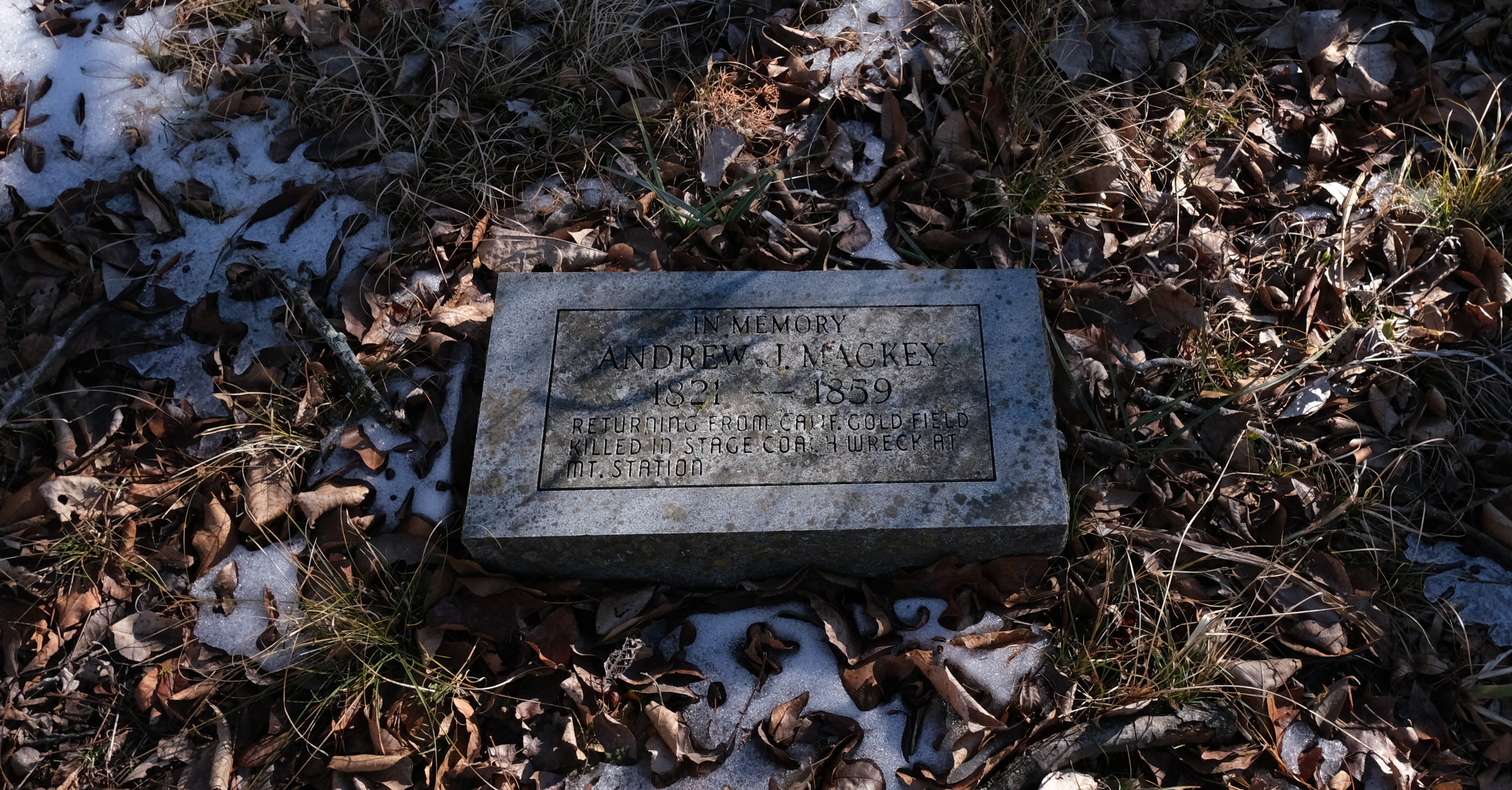
During a research foray in 2022, Latimer County rancher and historian Earl Shero took me to the spot at Mountain Station where the accident may have occurred. He pointed out the steep descent where the stagecoach would have careened out of control, crashing into the trees on the rocky hillside. There in the Mountain Station cemetery I also saw the grave marker for Andrew Mackey, easy to find because it is so new in the old graveyard, placed recently by one of his Blalack descendants. The marker reads:
In Memory
Andrew J. Mackey
1821-1859
Returning from Calif. Gold Field
Killed in Stage Coach Wreck at
Mt. Station
The year of death on Mackey’s grave marker may be incorrect, but in the end the clock tells the story. The accident occurred on the evening of Friday, July 20, 1860. Late the following day, July 21, news of the accident had reached Van Buren, Arkansas, a town adjacent to Fort Smith, just across the Arkansas River. The only way this could have occurred would have been via a person on horseback or by stagecoach, as the telegraph line had not yet been extended to northwest Texas or Indian Territory. A stagecoach traveling at the average speed of 5.5 miles per hour expected over Indian Territory roads could have traveled the nearly 100 miles from Mountain Station to Fort Smith in about 17 hours, a man on horseback much faster. The average speed of the Pony Express was 10 miles per hour, but that speed was achieved because a fresh horse was acquired every 10 to 15 miles. At that brisk rate an express rider could have reached Fort Smith in about 10 hours, although in reality it would have taken somewhat longer.
Mountain Pass Station in Texas was 487 miles from Fort Smith, requiring nearly five days’ travel in a stagecoach and at least two days by horseback under the best possible circumstances. When the report of the accident was received in Fort Smith, a coach was dispatched immediately to attend to the wounded and by July 23, 1860, thanks to extension of the Missouri and Western telegraph line to Fort Smith, word of the accident had been disseminated all over the eastern United States. By the time the injured passengers arrived in Fort Smith on Sunday, July 22, a wagon carrying passengers from Mountain Pass, Texas would have still been about three days away. The timeline stands on its own in clarifying that it would have been a physical impossibility for the passengers to have arrived from Mountain Pass Station, Texas, to Fort Smith, Arkansas, by July 22, 1860.
Given the evidence, it is reasonable to conclude that Mountain Station in the Choctaw Nation of Indian Territory, not Mountain Pass Station in Texas, was where Mackey met his maker, Muybridge’s life was changed, and the invention of moving pictures was set in motion.
For more on the Butterfield Overland Mail in Indian Territory, see https://susandragoo.com/2025/07/13/who-ran-fishers-station/ and https://susandragoo.com/butterfield-oklahoma/
Want to support the Oklahoma Chapter of the Butterfield National Historic Trail Association in its mission to preserve, promote and protect the Indian Territory segment of the trail? Join the National Association and the Oklahoma chapter here: https://www.butterfieldtrail.org/
And you can make a donation to the association here: https://www.paypal.com/donate/?hosted_button_id=BPTNYVU5KW9LC
 susan dragoo
A very interesting – very visual read about such an awful incident. Thank you.
Interesting. I own part of Blue Mountain, but in Pushmataha County. Your story made me want to plan a trip to the other Blue Mountain
You should!